
Parts 1–4 compliant
British standard certified
Physical damage protection
Substation grounding standards
Quality management system
Foundation of Lightning Safety
Why a Properly Designed Earthing System is Critical in Malaysia
Malaysia experiences 180–260 thunderstorm days per year — among the highest in the world. Without a low-resistance, well-bonded earthing system, lightning discharge currents cannot safely dissipate into the ground. The result: destructive step and touch potentials, equipment damage, system failures, and risk to human life.
An effective earthing system is the foundation upon which every other layer of lightning and surge protection depends. It provides the low-impedance fault current path required by MS IEC 62305, Suruhanjaya Tenaga (ST) supply regulations, and JKR engineering standards — for electrical systems, ELV networks, IT infrastructure, and mechanical services alike.
R = ρ · L / A
Tokai Engineering uses CDEGS (Current Distribution, Electromagnetic Fields, Grounding and Soil Structure Analysis) software to model soil resistivity profiles and optimise earth electrode designs for your specific site — achieving the lowest possible resistance with the most cost-effective material layout.
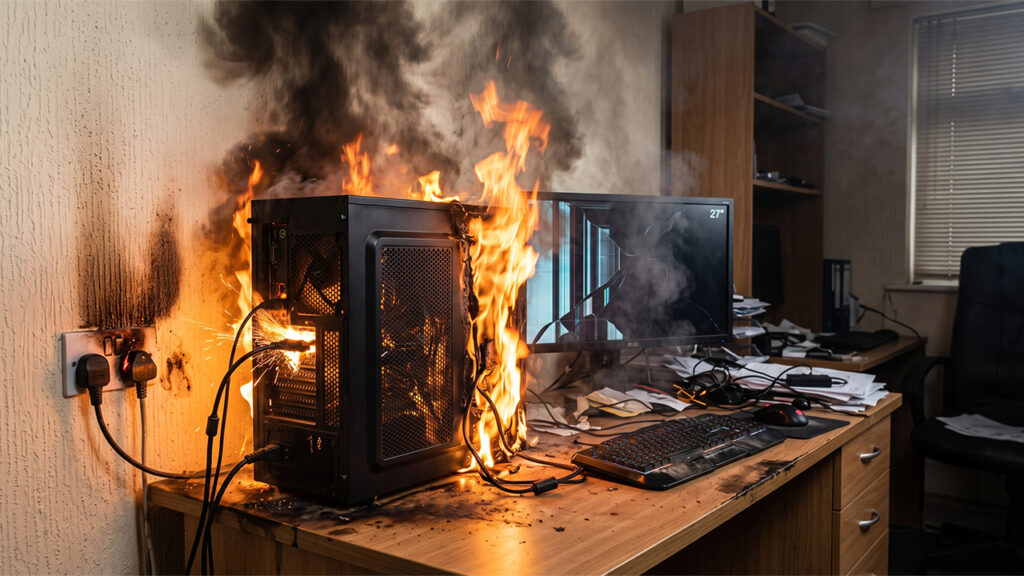
Poor Earthing Results In:
- Dangerous voltage rise across the site
- Side flashing between earthed and unearthed metalwork
- SPD malfunction and premature failure
- Irreparable equipment damage to IT and ELV systems
- Non-compliance with ST, JKR & MS IEC 62305 requirements
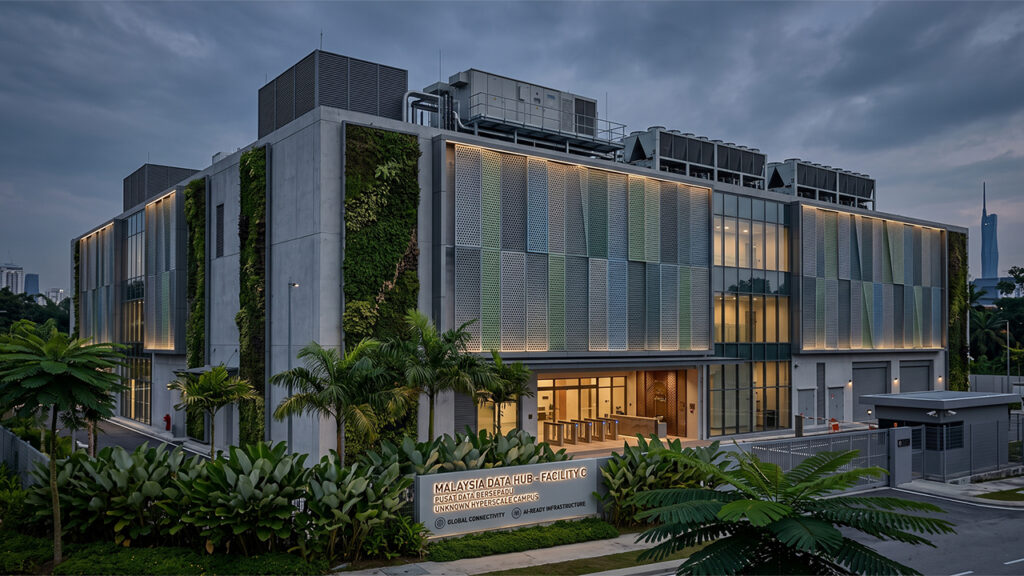
DATA CENTRE REQUIREMENT
Integrated earthing is required for all four systems:
- Electrical HV/LV
- ELV systems
- Mechanical systems
- IT infrastructure
Complete Earthing Solutions
Our Earthing Services
From soil resistivity analysis and system design through to supply, installation, and commissioning testing — Tokai Engineering delivers end-to-end earthing solutions for Malaysia’s most demanding infrastructure projects.
Design, supply and installation of copper tape earth mats and Ø16mm copper-bonded earth rod networks for substations, data centres and industrial facilities. Engineered to achieve target resistance per IEC 62305-3, BS 7430 and IEEE 80.
Site-specific soil resistivity measurement and CDEGS computer modelling to calculate optimum electrode configuration, predicted earth resistance, and step & touch potential safety analysis before any ground is broken.
Permanent, low-resistance molecular-bond connections for all earthing and lightning protection conductors — engineered for corrosion resistance in Malaysia's tropical underground environments. Fully complies with MS IEC 62305 & BS EN 62305-2006.
Main Equipotential Bonding Bar (MEB), Main Earthing Terminal (MET), structural steel bonding, cable tray bonding and foundation earth grid integration — ensuring all metalwork is raised to a common potential to eliminate dangerous voltage differentials.
Comprehensive post-installation verification including Earth Resistance Test, Soil Resistivity Test, Continuity Test, Step & Touch Potential Test, and Equipotential Bonding Test — with full documentation for JKR, TNB and regulatory submission.
As-built drawings, material traceability records, test certificates, and compliance documentation suitable for JKR, BOMBA, local authority, and international consultant review.
Our Methodology
End-to-End Earthing Project Delivery
From the first site visit to the final commissioning report, Tokai Engineering manages the complete earthing project lifecycle under a single responsible contractor.
Site Survey & Soil Resistivity
Wenner 4-pin soil resistivity measurement; site conditions assessment
CDEGS Modelling & Design
Computer-modelled earth grid optimisation; step & touch potential analysis
Supply & Material
Copper tape, rods, TOKAIWELD kits, MET/MEB busbars — all Tokai-supplied
Installation & Welding
Earth mat laying, rod driving, exothermic welding, bonding terminations
Testing & Documentation
Full commissioning test suite; compliance report for ST, JKR & client submission
Explore More Solutions
Complete Lightning Safety Ecosystem
Earthing is one component of a fully integrated lightning protection strategy. Explore our related services and technical resources below.
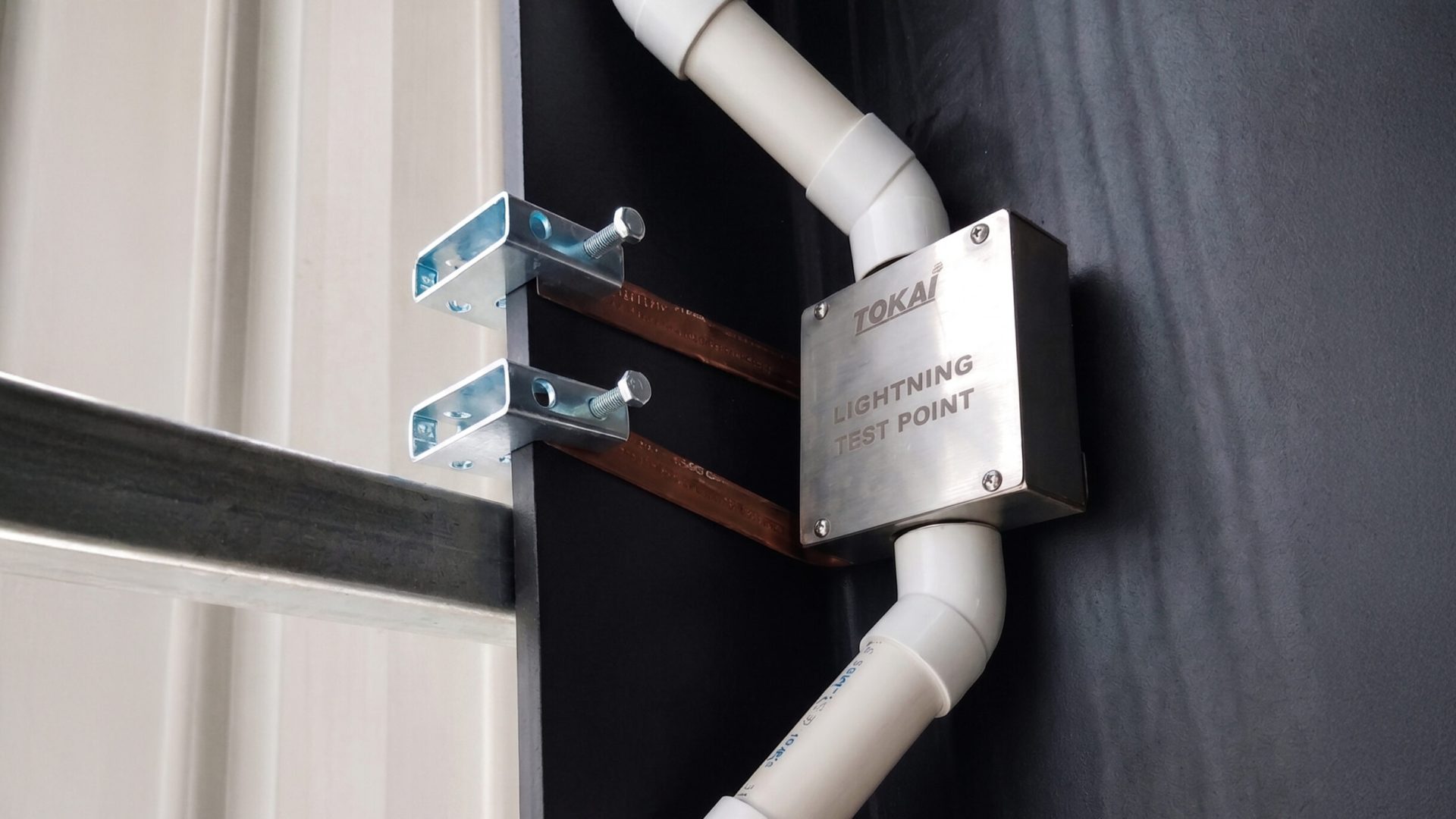
Air & Down Conductor Systems
Lightning Protection System
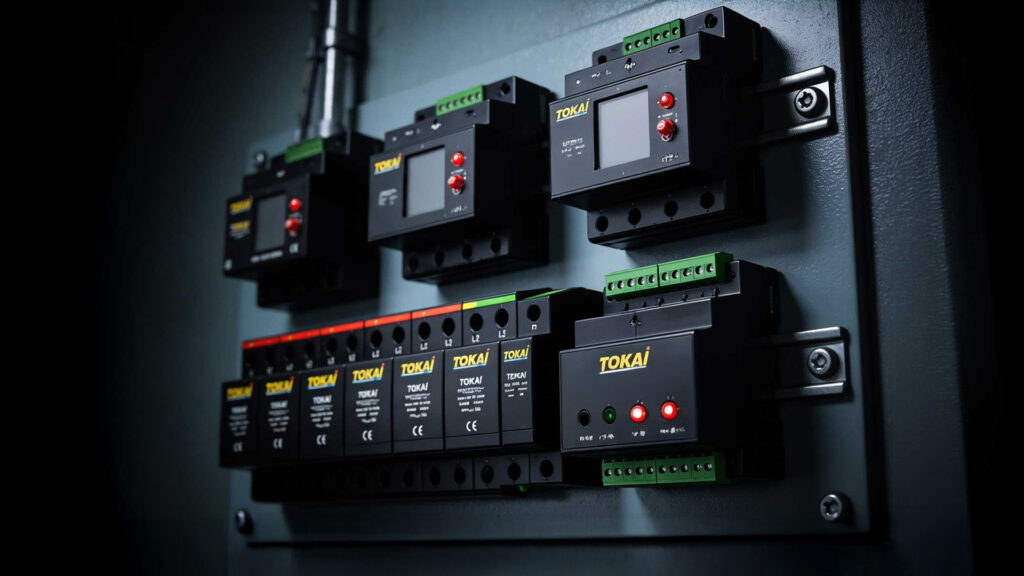
Type 1, 2 & 3 SPD
Surge Protection System
Sectors Served
Typical Applications
Why Choose Tokai Lightning Warning System?
Tokai brings practical site experience in lightning risk, earthing, surge protection, OSHE requirements and critical infrastructure delivery. We understand that warning systems must be simple enough for site teams to follow, robust enough for harsh environments and credible enough for management decision-making.
From deployment planning to alert response training, Tokai helps organisations build a lightning safety workflow that works in the real world, not just on paper.
Real-time lightning threat monitoring for exposed sites and operational facilities
Early warning alerts to support timely suspension of high-risk outdoor activities
Configurable alert zones, escalation levels and response procedures
Integration with siren, strobe, dashboard and notification workflows
Supports occupational safety, project governance and incident prevention
Useful for temporary construction deployments and permanent facility installations
Complements lightning protection, earthing and surge protection systems
Supports documented safety response and operational accountability
FAQ
Common Questions About Earthing Protection System
Understand Earthing Protection System, standards compliance, and Tokai’s services.
What is the minimum earth resistance required in Malaysia?
In Malaysia, the standard requirement per MS IEC 62305 and Suruhanjaya Tenaga (ST) guidelines is a maximum earth resistance of 1 Ω for substations and data centres, and ≤10 Ω for general industrial and commercial installations. Tokai performs CDEGS soil resistivity modelling to design an optimised earth electrode system that achieves the required resistance for your specific site soil conditions.
Why is exothermic welding preferred over mechanical clamps for earthing connections?
Exothermic welded joints (such as TOKAIWELD) create a molecular bond between conductors, producing a connection with current-carrying capacity equal to or greater than the conductor itself. Unlike mechanical clamps, they do not loosen over time, are highly resistant to corrosion in Malaysia’s tropical underground environments, and maintain low resistance permanently — making them the preferred method for MS IEC 62305 and BS EN 62305-2006 compliant earthing systems.
What tests are required after an earthing system is installed in Malaysia?
After installation, a certified earthing system must undergo: Earth Resistance Test, Soil Resistivity Test, Continuity Test, Step & Touch Potential Test, and Equipotential Bonding Test. Tokai Engineering provides full commissioning and testing services with documentation compliant with IEC 62305-3, BS 7430, and IEEE 80/81 standards, suitable for JKR, ST, and client authority submissions.
What is CDEGS and why is it important for earthing design?
CDEGS (Current Distribution, Electromagnetic Fields, Grounding and Soil Structure Analysis) is specialist engineering software used to model soil resistivity layer profiles and simulate the performance of proposed earth electrode configurations. It allows Tokai’s engineers to predict earth resistance, optimise material quantities, and calculate step and touch potential hazard zones before any earthwork begins — saving cost and ensuring the installed system will comply with safety standards from day one.
What is equipotential bonding and why is it required?
Equipotential bonding connects all metalwork within and entering a building to a common Main Equipotential Bonding Bar (MEB) — including structural steel, cable trays, pipework, and ELV cable screens. Its purpose is to ensure that during a lightning or fault event, all metalwork rises to the same potential simultaneously, eliminating the voltage differences that would otherwise cause dangerous side flashing, equipment damage or electric shock to personnel. It is a mandatory requirement under IEC 62305-4 and Suruhanjaya Tenaga supply regulations.
Complete Protection
Related Services
Earthing system is one layer of a complete protection strategy. These services work together under the IEC 62305 framework.
Take appropriate measures to protect your facilities today
We provide preliminary site assessments, CDEGS modelling proposals, and full design-and-build quotations for projects across Malaysia and the region.